
manufacturing, service and
Professional manufacturer
Service hotline
400-0531-567

manufacturing, service and
Professional manufacturer
Service hotline
400-0531-567

Add: No. 818, Jingshi Road, Jinan, China
Tel: 0086-531-87453566
Fax: 0086-531-87453566
P.C.: 250306
Homepage: http://www.sdjk.org.cn
Mailbox sdjkgroup@163.com
jianke3566@163.com
Key points for disassembling, assembling, and transferring asphalt mixing plant equipment
1、 Key points for disassembly and transportation.
The dismantling and installation of asphalt mixing plant equipment shall be carried out under a division of labor and responsibility system, and an implementation plan shall be formulated to ensure the safety and accident free operation of the entire dismantling, hoisting, transportation, and installation process. Implement the principle of "small before big, easy before difficult, ground before high altitude, surrounding before main unit, whoever disassembles, installs". In addition, while ensuring the accuracy of equipment assembly and performance, it is necessary to control the degree of disassembly of the equipment to meet the requirements of improving transportation.
2、 Key points for dismantling.
(1) Preparation.
Due to the complexity and size of this equipment, a practical and feasible plan should be developed based on its location and the actual situation on site before disassembly, and comprehensive and specific safety technical instructions should be provided to the personnel involved in disassembly.
Inspect and register the appearance of the dismantled equipment and its accessories, and based on this, draw a relative position map between the equipment for reference during installation. At the same time, it is necessary to cooperate with the manufacturer to cut off and remove the power, water, and gas sources of the equipment, and drain the lubricating oil, coolant, and cleaning solution completely.
Before disassembly and assembly, a unified digital identification positioning method should be used for identification, and electrical equipment should also be marked with some identification symbols. All types of disassembly and assembly signs and labels must be clear and firm, and the size measurement points of positioning signs and labels must be marked with long-term markings at relevant locations.
(2) Dismantle the program.
It is not allowed to cut off all wires and cables. Before dismantling, three comparisons (inner wire, terminal board, outer wire) must be made to confirm that there are no errors before dismantling. Otherwise, the wire number identification must be adjusted. The disassembled wire ends should be firmly marked, and those without markings should be marked before disassembly.
To ensure the safety of the equipment, suitable tools should be selected during disassembly and should not be dismantled arbitrarily. The disassembled bolts, nuts, and locating pins should be immediately screwed back or inserted back into their original positions after being coated with oil to avoid confusion and loss.
For disassembled parts, they should be cleaned in a timely manner, rust proofed, and stored in designated locations. After installation, the on-site garbage should be cleaned up in a timely manner.
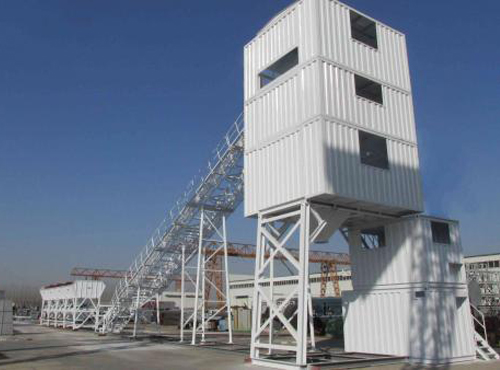
Thirdly, the key points of transportation.
(1) Preparation.
Establish a mechanical equipment transportation team to organize and divide transportation tasks, propose safety technical requirements for transportation operations, and develop transportation plans. Understand the transfer transportation route, grasp the distance of the transfer transportation highway section and the restrictions on over limit and over wide road sections.
Crane drivers and crane operators must hold a special operation qualification certificate and have at least 3 years of work experience. The tonnage of the hoist should meet the requirements of the lifting plan, with complete certification and passing inspection by the local technical supervision department. The lifting sling meets the requirements and has passed quality inspection. The condition of transportation vehicles should be good, with complete license plates and certificates, and have been verified as qualified.
2、 Lifting and hoisting.
During the process of improvement, safety operating procedures should be strictly followed. The lifting operation on the construction site must be commanded by a dedicated person from the heavy industry, and multiple people are strictly prohibited from commanding. And equipped with dedicated safety inspectors to promptly eliminate safety hazards.
To avoid cross lifting operations. In order to avoid damaging equipment and facilities during the lifting process, appropriate lifting points should be selected and protective measures should be taken at the contact between the steel wire rope and the equipment. When working at high altitude, the operator must wear a safety helmet and a safety belt, and the use of both must comply with safety regulations.
The equipment that has been loaded into the trailer should be fixed with sleepers, triangular blocks, steel wire ropes, and manual chain blocks to prevent it from falling off during transportation.
(3) Transfer and transportation.
During transportation, a security team consisting of one electrician, two wire pickers, and one safety officer should be responsible for ensuring the safety of the transportation process. The security team must be equipped with necessary tools and equipment to clear the way in front of the transport convoy. The convoy should be numbered before traveling, and during the journey, it should be driven in the order of the numbers. When carrying equipment that cannot be disassembled and has a volume exceeding the specified quantity, clear signs should be set up at the exceeding parts, with red flags hung during the day and red flags hung at night.
Trailer drivers should follow the instructions of the security team, comply with road traffic regulations, drive cautiously, and ensure driving safety throughout the entire route. At the appropriate time, the security team should check whether the equipment is securely tied and whether the vehicle is in good condition. If any safety hazards are found, they should be immediately eliminated or contacted with the commanding personnel. There should be no malfunctions or safety hazards during driving.
Drivers should not get too close to the car while driving. On general roads, two vehicles should maintain a safe distance of about 100 meters; On the highway, two cars should maintain a safe distance of about 200 meters. When a convoy overtakes a slow car, the driver of a passing car is responsible for reporting the situation ahead to the following car and guiding them to overtake. If there is no road ahead, no forced overtaking is allowed.
According to the driving situation, the fleet can choose to take temporary breaks at appropriate locations along the way. When encountering temporary parking situations such as traffic congestion or asking for directions, drivers and passengers are not allowed to leave the vehicle. Temporary parking of cars requires a double flashing warning, while other vehicles are responsible for reminding drivers to choose the appropriate driving speed.
Fourth, installation points.
(1) Basic settings.
Prepare the site according to the equipment's floor plan and ensure smooth entry and exit of all vehicles. The anchor bolts on the legs of the mixer building should be able to move appropriately in the foundation holes to adjust the position of the legs. Select appropriate lifting equipment to position the legs and install connecting rods at the top of the legs. Pour the mortar into the foundation hole, wait for the cement to harden, fix the washer and nut on the anchor bolt, and then tighten the support leg in place.
2、 Equipment installation.
Lift the base platform and place it on the bracket. Insert the positioning pin on the bracket into the corresponding hole on the platform bottom plate and attach the bolt.
After installing the thermal elevator, it can be lifted to a vertical position, then its bottom can be placed on the foundation, and support rods and bolts should be installed to prevent swinging and rotation. Align the discharge chute with the connection port of the dust seal cover of the vibrating screen.
Set up the drying roller, lift and place it, and install the support legs and rods. Open the dust seal cover on the hot material elevator and connect the discharge chute of the drying roller to the feeding chute of the hot material elevator. Adjust the tilt angle of the drying roller in place and adjust the height of the telescopic support legs at the feeding end of the drying roller. Lift the burner to the installation flange, tighten the installation bolts, and adjust to the correct position.
Set up an inclined belt conveyor and vibrating screen, hang the inclined belt conveyor together, and connect it to the feeding trough of the drying roller. After installing the vibrating screen, it should be positioned correctly to prevent material deviation and ensure that the vibrating screen is aligned with the required angle in the length direction.
Each asphalt system installation requires an independent chassis to lift the asphalt pump, connect it to the asphalt insulation tank and mixing equipment body, and install a discharge valve at the lower point of the asphalt pump inlet pipe. The oil pipeline should be arranged obliquely, and the inclination angle of the oil pipeline should not be less than 5 ° to ensure the smooth flow of asphalt. When setting up asphalt pipelines, the height of the pipeline should ensure that vehicles underneath the pipeline are unobstructed.
The asphalt three-way valve is located above the asphalt weighing hopper. Before installation, the plug on the valve should be removed, and a rod-shaped lubrication seal should be inserted into the valve body. Then, the plug should be replaced and tightened.
The wiring and installation of electrical appliances must be carried out by qualified electricians.
Fifth, key points for storage.
If this machine needs to be stored for a long time, the site should be planned and leveled before storage to keep the access roads unobstructed.
Before storage, the following work should be done as required: rust removal, bundling, covering, and inspection, acceptance, storage, and protection of all construction equipment, testing instruments, cleaning equipment, and labor protection supplies; Clean all materials inside the mixing equipment; Cut off the power supply to prevent equipment from starting incorrectly; Tie the V-shaped tape onto the protective tape, apply lubricating grease, and apply the moving chain and adjustable bolt;
According to the requirements of the pneumatic system manual, maintain the pneumatic system by covering the exhaust chimney outlet of the drying roller to prevent rainwater from entering. During the storage process of the equipment, a dedicated person should be designated to supervise, regularly clean and maintain, and keep records.
Address: No. 818, Jingshi Road, Jinan, China
Tel: 0086-531-87453566
Fax: 0086-531-87453566
Postal Code: 250306
Email: sdjkgroup@163.com
jianke3566@163.com